
May is National Speech-Language-Hearing Month and this year’s theme is “envisioning possibilities for the future.” This theme invites us to consider where have we come from and where we are going.
The American Speech-Language-Hearing Association (ASHA) is celebrating its 100th anniversary this year. However, augmentative and alternative communication (AAC) is a relative newcomer to the field. Let’s take a quick trip down memory lane to see how AAC started and where it has come:
- The 1950s can be considered the beginning of AAC as it is currently known.
- In the 1960s, an awareness of using technology to enhance communication was developing and early studies focused on using typewriters as AAC devices.
- In the 1970s the first voice output AAC systems became available but many of the early AAC devices relied on spelling and were only usable by individuals with literacy skills.
- In the 1980s speech generating devices using picture icons became available.
- In the 1990s and 2000s, rapid advancements were seen in technology. Numerous programmable and portable speech generating devices became available.
- In 2005, Kent-Walsh and McNaughton proposed an eight-step instruction model for use with communication partners of people who use AAC. They sought to increase attention paid to the instructional methods that have been associated with success and stressed the need to identify evidence-based procedures for communication partner instruction in AAC.
Today there are numerous technologies available for complex communicators of all skill levels. However, we still have a long way to go when it comes to implementation, particularly when it comes to communication partner education.
2005 was twenty years ago! Still, to this day, the most common form of training is the in-service, with limited follow-up support. Teaching is not talking, and learning is not listening (Darling-Hammond, 1995). For over 30 years, researchers have known that just talking about a strategy isn’t enough.
Numerous communication partner instruction programs in AAC have derived from from Kent-Walsh & McNaughton’s seminal 2005 work, including the ImPAACT program, POWR strategy, and the SMoRRES® Training Program.
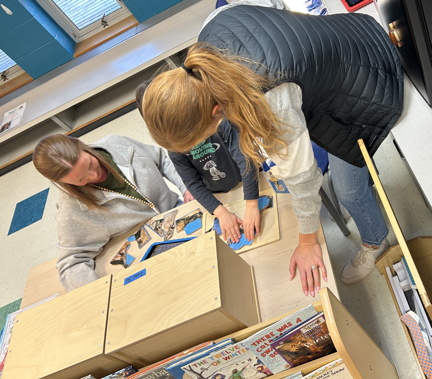
However, the SMoRRES® Training Program differs from other communication partner education programs in that:
- It focuses on teaching communication partners to provide partner-augmented both at home and in the classroom;
- It occurs during naturally occurring routines and activities. These routines are predictable, functional, and provide meaningful contexts for children to learn new skills. Furthermore, families are more likely to adhere to home programs when they are contextualized (i.e., embedded) into natural routines and activities.
- The SMoRRES® Training Program incorporates children’s existing SGDs, thus increasing the likelihood of generalization.
The SMoRRES® Training Program is more than just talking. It’s about demonstrating use of PAI, allowing opportunities for hands-on practice, and coaching in the natural environment – together, all of these elements are all required for success. In 2025 and beyond, we can do better than a one-and-done training. Let’s envision a future where all communication partners are trained with evidence-based strategies.