
In 2006, Sarah Blackstone wrote, “Being an effective communication partner or AAC facilitator is not intuitive. It often requires one to change long-established, unconscious ways of communicating” (p. 12). And changing habits can be hard!
Does using your child’s AAC system at home feel like a chore? Some studies suggest that families spend an average of over 6 hours a week implementing therapy. But using your child’s AAC system at home shouldn’t be “homework.” Communication happens everywhere! It might be time to consider embedding AAC into natural routines and activities. Embedding AAC isn’t just beneficial for families. These routines also provide meaningful opportunities for children to learn AAC because they are predictable, functional, and occur often.
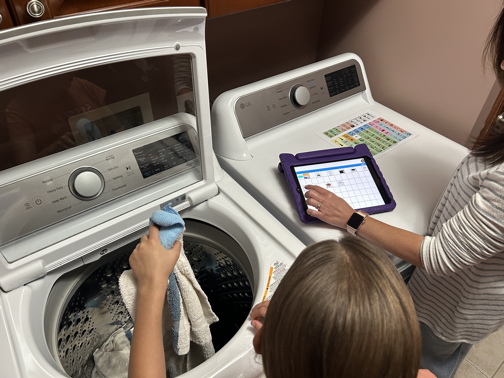
Many families tell us they want to use the device more, but report that they haven’t learned ways to use the AAC system in daily routines at home. When parents aren’t taught how to contextualize the system, it may be seen as a conscious effort or even a burden. In addition, families who have to make a separate time for AAC may miss out on leisure time, work, or time with other family members. Nobody wants that.
So… how can a family become so comfortable with AAC in the home that it happens without effort? It often requires training and coaching. The SMoRRES® Training Program is designed to help families learn how to provide partner-augmented input on their child’s existing AAC system within natural routines and activities.
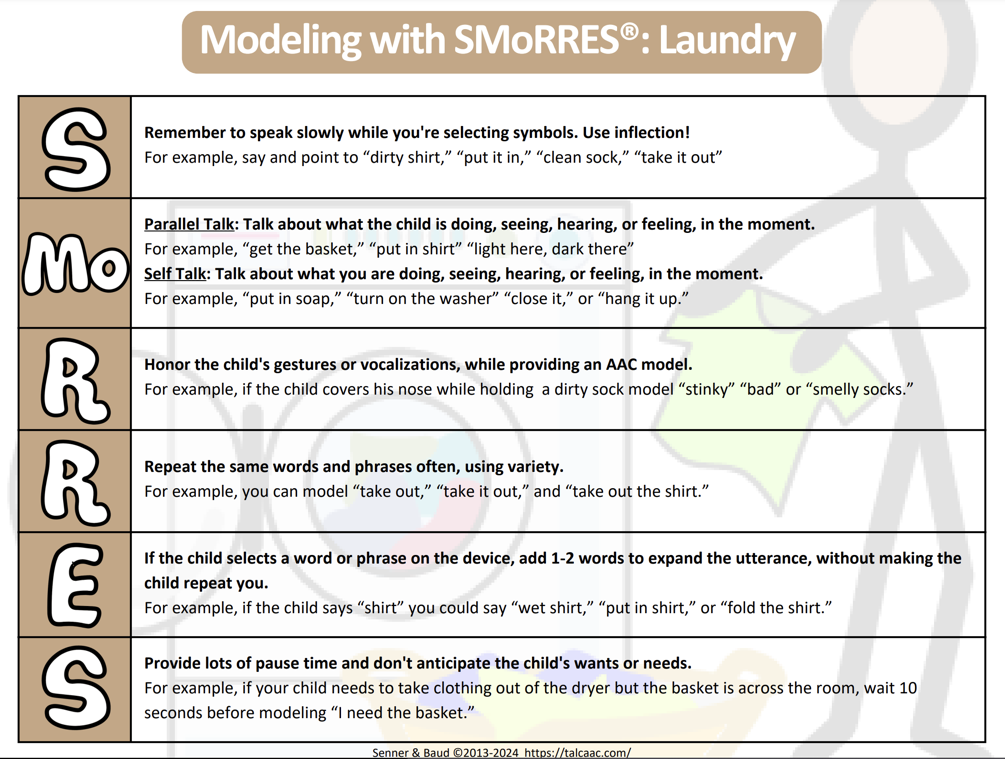
The very first step in embedding AAC is identifying routines and activities that occur often in the home, especially those things in which your child is interested. We have created a free communication interests and opportunities inventory to help you do just that. Visit our Free Resources page to download your copy of this checklist, a template for printing the magnetic laundry board pictured above, the laundry infographic, and more.
To learn more join us at an upcoming SMoRRES® Training or contact us to schedule 1:1 coaching.